
27 April 2026
Louisa Ghevaert was pleased to attend the relaunch of The Surrogacy Network on 22 April 2026. This event addressed recent UK surrogacy trends and statistics, as well as advocacy and pathways to parenthood for those individuals with Mayer Rokitansky Kuster Hauser Syndrome (MRKH). It brought together experts from across the UK fertility and surrogacy sector to inform and educate professionals and deliver best practice. It also highlighted the importance of raising awareness and improving support for different groups of people who experience uterine factor infertility.
UK Surrogacy Trends
Professor Kirsty Horsey delivered the first session and explained that whilst the numbers of children born through surrogacy is small, the number of parental orders granted in England and Wales has increased from 117 in 2011 to 514 in 2023, 477 in 2024 and 537 in 2025 (Ministry of Justice statistics March 2026). She explained that the numbers of parental orders granted in Scotland is much smaller with 17 granted in 2022, 27 in 2023 and 20 in 2024 (Scotland National Records Office, 2025). She went on to explain that whilst there is a legal framework governing surrogacy in the UK, it is more than 40 years old and surrogacy is a global family building pathway and this can cause problems.
Professor Kirsty Horsey explained that research (2014 – 2021) into the views and experiences of 47 UK surrogates showed that 39 said that they agreed with the proposed surrogacy law reforms and new regulated pathway to parenthood recommended by the Law Commissions of England, Scotland and Wales (with just 4 opposed to proposed law reform). She added that mean payments to UK surrogates stands at £15,535.00. She went on to explain that total overseas surrogacy costs are much higher than in the UK, with nearly three quarters costing more than £60,000.00, and mean compensation payments to overseas surrogates of £32,992. Moreover, the biggest destinations for UK intended parents undertaking surrogacy continue to be the UK and the US, although there have been recent increases in other jurisdictions (e.g. Georgia and Nigeria).
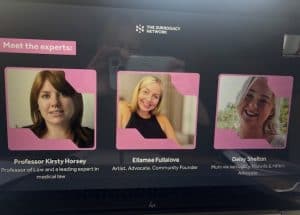
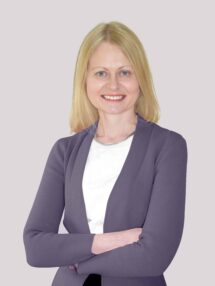
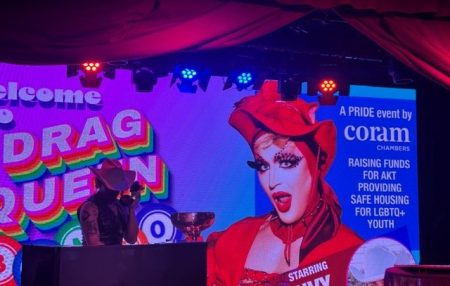
Images: Kirsty Horsey Professor of Law at Loughborough University, Ellamae Fullalove Artist, Advocate, Community Founder,
Daisy Shelton Mother via Surrogacy, Midwife & MRKH Advocate
Mayer Rokitansky Kuster Hauser Syndrome (MRKH) & Pathways to Parenthood
Ellamae Fullalove then delivered an informative in-depth session on Mayer Rokitansky Kuster Hauser Syndrome (MRKH) and why surrogacy is an important pathway to parenthood for those people with MRKH. Ellamae explained that MRKH is a congenital condition which people are born with. It is a difference in sex development affecting 1 in 5000 female births, where there is an absent or underdeveloped uterus, cervix and vaginal canal. Patients with MRKH have functioning ovaries but no monthly periods. They also have XX Chromosomes and female hormones and typical external female development. Ellamae went on to explain that MRKH is usually diagnosed between the ages of 15-17 following a physical vaginal examination and ultrasound to detect absence or underdeveloped uterus and vagina. Moreover, MRKH has two different forms: MRKH type 1 which is reproductive in nature and MRKH type 2 which carries additional developmental differences or impairments of hearing/bones/kidneys or heart.
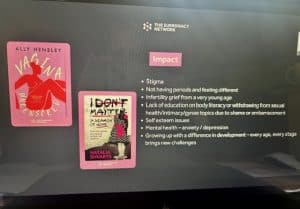
Ellamae Fullalove explained that those people with MRKH encounter a range of issues throughout their lives, as well as stigma. They experience infertility grief from a young age and often struggle with self-esteem issues, shame and embarrassment. This can impact their mental health, leading to anxiety and depression about growing up different. It can also result in those with MRKH struggling to deal with topics such as sexual health, intimacy and pregnancy. This is why surrogacy is an important pathway to parenthood for those with MRKH. However, UK clinics vary in expertise and ability to diagnose MRKH as it is a rare condition.
Ellamae Fullalove explained that those with MRKH need lifelong support, both psychological and physical, as every stage of life brings new challenges. It also requires more focus on normalising pathways to parenthood during early education no matter people’s sexuality, marital status or gender. Furthermore, more support is required for marginalised MRKH groups due to cultural stigmas and barriers. This requires more knowledge and awareness that not everyone can get pregnant naturally and that not all women have a viable uterus and that uterine factor infertility includes a range of people: LGBTQI+, intersex individuals who cannot carry a pregnancy, those who have undergone hysterectomy or have endometriosis or other uterine conditions, as well as those with health conditions which mean it is unsafe to carry a pregnancy.
Ellamae Fullalove explained that those people with MRKH have several pathways to parenthood including gestational surrogacy, womb transplantation and adoption. However, they can experience overwhelm, stigma, funding difficulties and physical and mental challenges in seeking to build a family and become a parent. This is why patient advocacy about MRKH and raising awareness and understanding about uterine factor infertility is important. Daisy Shelton, who has MRKH, then shared some of her personal experiences and journey to parenthood through surrogacy. Daisy explained that she had been naive about the impact of MRKH on her life following her own diagnosis aged 15 years old. She had always wanted to be a mother and she was fortunate that her mother offered to carry a pregnancy for her. She went on to explain that as a midwife, and even though she cannot give birth herself, she can still be part of that process and help care for others. She concluded by saying that individual conversations about MRKH can be really helpful.
Specialist Fertility, Surrogacy & Family Law
In seeking to build a family through surrogacy (whether in the UK or abroad) or navigate a range of fertility and health challenges, it is also very important to proactively manage a range of legal issues and risks to place family building and life on a firm basis. Louisa Ghevaert Associates provides end-to-end legal strategies to effectively plan preconception, pregnancy, birth and family life, including:
- Acquisition of legal parentage following a domestic or international surrogacy arrangement.
- Acquisition of legal parentage following a known donor arrangement.
- Acquisition of legal parentage following a co-parenting arrangement.
- An application to bring or defend a Declaration of Parentage (e.g. following a direct-to-consumer DNA test or to re-register a birth certificate).
- An application to bring or defend a step parent adoption order.
- An application for an order to recognise a foreign adoption under English common law.
- Unexpected death of a loved-one and issues with posthumous storage and use of eggs, sperm and embryos in fertility treatment (e.g. due to an accident, illness).
- Care and upbringing of children following a dispute with an ex-partner, parent, donor, surrogate or family member.
- Legal issues/options following age-related fertility and loss of opportunity for conception.
- Delays in medical diagnosis and consequent treatment and associated impact on individual fertility.
- Difficulties with storage and use of frozen eggs, sperm and embryos in fertility treatment in the UK (e.g. lack of consent and expiry of storage terms).
- Issues with import of frozen gametes/embryos into the UK for fertility treatment and surrogacy (e.g. due to anonymous and commercially obtained gametes and embryos which engage UK public policy restrictions).
- Issues associated with the export of frozen gametes and embryos abroad for use in fertility treatment and surrogacy (e.g. lack of consent and storage term difficulties).
- Legal parentage disputes with an ex-partner, donor, co-parent, step-parent, surrogate.
- Legal parentage disputes with a UK fertility clinic (e.g. problems and omissions with HFEA consent forms).
To learn more about UK Surrogacy Law click here.
To learn more about International Surrogacy Law click here.
To learn more about Family Building Options & Law click here.